
Call nowFree estimate
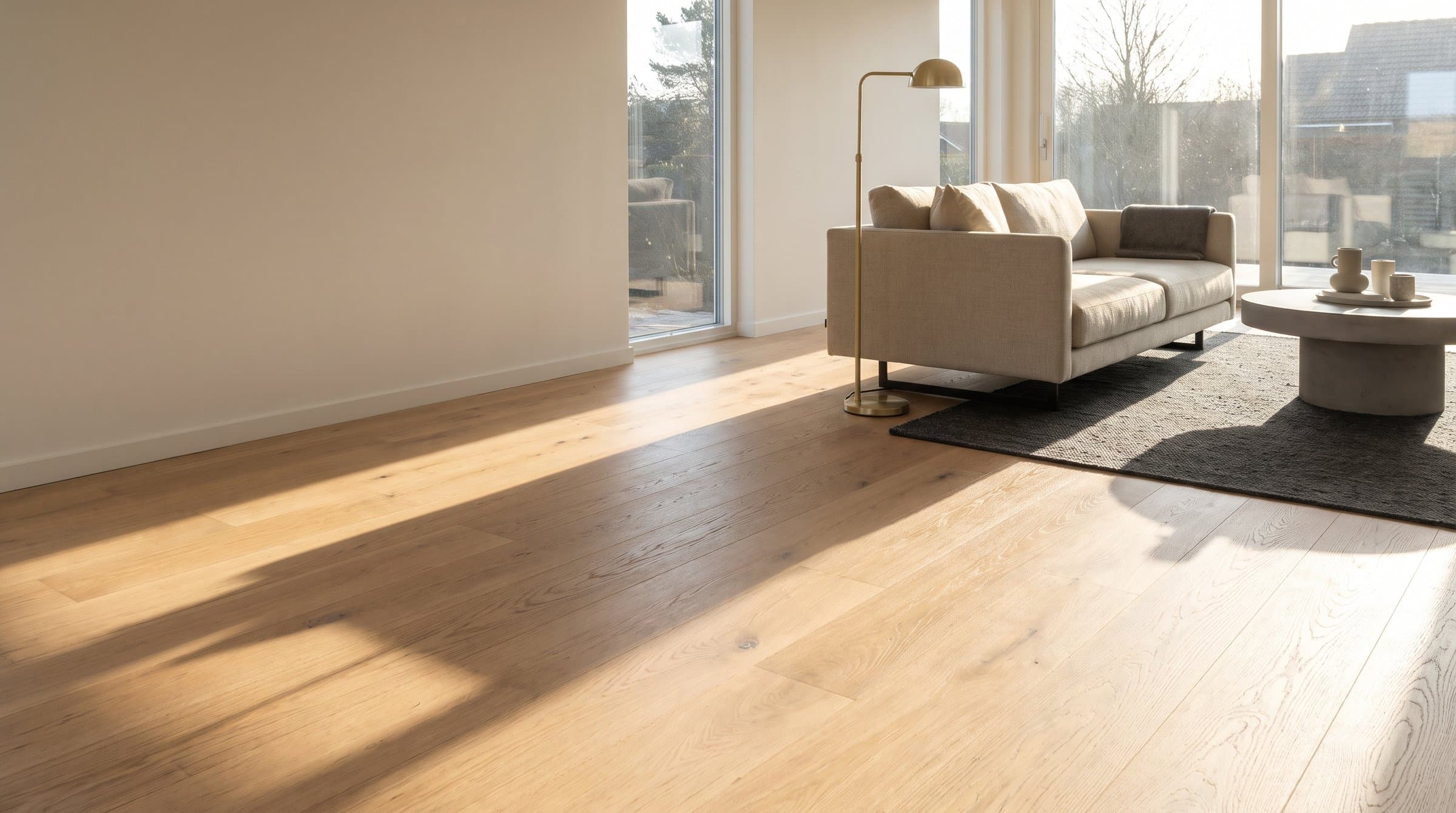
Design inspiration of sunlit oak hardwood flooring in a living room with a sofa and a floor lamp
Natural character

Hardwood Flooring

Real wood floors for rooms that can hold a stable indoor climate, installed with the acclimation and subfloor work Georgia houses actually need.

Completed projects include a 1-year warranty that starts at project completion.

Design inspiration, not a completed JRF project

The wood

Solid, engineered, and the finish on top

Hardwood means a real wood surface. The core under that surface, and whether the finish is applied in the house or at the mill, changes how the floor behaves in a humid climate.

Solid hardwoodMilled from one piece, usually 3/4 inch thick. It can be sanded more than once over a long life. It also moves across its width when indoor humidity swings, which is the ordinary summer-to-winter pattern in Georgia.
Engineered hardwoodA real wood wear layer on a plywood or composite core. The core moves less, so it is the better wood floor where the humidity swing is wider, or on a slab that has tested dry enough for the product.
Site-finishedRaw boards are installed, sanded, colored if you want color, and coated in the house. The finish is continuous. You live with sanding dust for a few days.
PrefinishedThe wear layer arrives already coated. Many of these finishes are hard. The tradeoff is a small bevel at the joints and a color you accept from the sample rather than tune on site.
Good fits

Where hardwood earns its place

Oak is the common board in Metro Atlanta houses because the grain hides everyday scuffs. Hickory, walnut, and maple each scratch and stain differently. The species is a second decision, after the room.

Living rooms and bedroomsOn a wood subfloor, above grade, this is the ordinary good use of hardwood. The floor can run continuously when the hall and the doorways are included.
StairsTreads, risers, and nosings should be part of the same job as the floor they meet. The nosing profile is chosen before the treads are cut.
Open kitchens, with a limitSome engineered products are rated for kitchens. Solid oak next to a sink is one leak away from cupping. We will say so on site.
Rooms to skipA damp basement, a full bath, and a laundry room with a history of overflow are not hardwood rooms.
Install

Acclimation and a flat subfloor, then the boards

Most hardwood complaints start with a subfloor that was not flat, or with boards fastened the day they came off the truck.

Moisture and flatnessThe subfloor is checked before the wood is fastened. High seams get sanded, low spots get filled, and a wet subfloor waits. Covering a damp crawl-space floor locks that moisture into the wood.
AcclimationBoxes are opened in the rooms, with the heat or the air conditioning running the way you actually live. A warehouse is not your living room, and a Georgia July is not January.
LayoutDirection, starting wall, and every doorway are decided first. The row that lands in a hallway should not end as a sliver.
Fastening and trimNail-down or glue-down follows the product. Site-finished floors are sanded and coated after the furniture is out. Shoe molding goes on last so a future refinish can pull it.
Care

Let the wood move, and keep the finish dull-free

A hardwood floor in this climate is a humidity story as much as a cleaning story.

Keep the air onA solid floor that sits in a closed house through an Atlanta August can cup. If you leave for weeks in summer, do not shut the system off.
CleaningSweep grit. Use a cleaner made for the finish, barely damp. Steam mops and wet string mops cloud a site finish and raise the grain.
Sun and rugsSouth-facing rooms fade. Move rugs now and then so the fade stays even. A rubber-backed rug can trap moisture against the finish.
RecoatsA factory finish can often be screened and recoated before the wear layer is gone. That is a different job from a full sand, and it only works if the finish has not already worn through to bare wood.
Hardwood questions

Worth settling before the wood is ordered

Bring the subfloor and the way you run the house. The sample is the easy part.

Should a Metro Atlanta house get solid or engineered wood?+

Above grade, on plywood, in a house that stays air-conditioned, solid oak is a sound choice and can be sanded again years from now. On a slab, or in a room that swings hard between a dry winter and a humid summer, engineered wood is the more stable board. The wear layer still has to be thick enough to sand at least once if you care about that.

Can you refinish the hardwood already in the house?+

Sometimes. We look at thickness, previous sandings, and whether the boards are cupped from moisture. A floor that is already thin, or still wet, should not be sanded. The refinishing page is the longer version of that decision.

How long do the boards need to sit in the house?+

Long enough to meet the room. Fastening them on delivery day is how gaps show up in January. The wait depends on the product and on the moisture in the subfloor, and it is set before anything is fastened.

Do the closets and the hall have to match?+

They do not have to be the same species. The heights do have to meet. A closet left in old sheet vinyl next to new 3/4-inch oak needs a reducer that was planned.

Tell us what is under the current floor.

Hardwood goes well when the subfloor and the indoor climate are part of the plan.

Completed projects include a 1-year warranty that starts at project completion.

Request a free estimate